What is an ichthyosaur?
Real reptiles, a tricky name, and a shape like a dolphin
Official pages suggest breaking the word down as ICK-thee-OH-sore. Behind the name is “a group of ancient marine reptiles whose ancestors returned to the sea more than 250 million years ago.”[source]
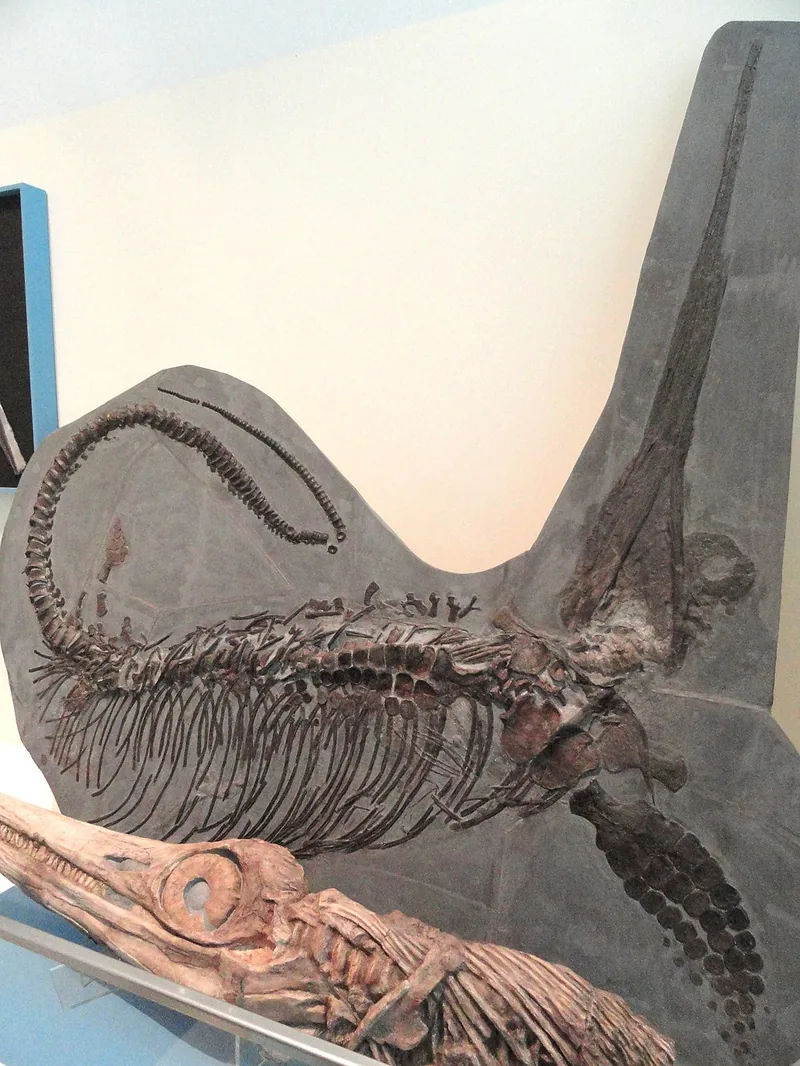
“During the era of the dinosaurs on land, a group of prehistoric marine reptiles called ichthyosaurs lived in the oceans.” Some “grew to join the ranks of the largest animals that ever lived, while others would have looked similar to dolphins as they dashed through the water.” Official wording is also humble: “there’s still a lot we don’t know about this diverse group of animals.”[source]
A popular mix-up is put plainly. “Though they’re both reptiles and lived at the same time, dinosaurs aren’t closely related to ichthyosaurs. The dinosaurs lived on land, whereas ichthyosaurs never left the water.” As they adapted to life in the ocean, “ichthyosaurs evolved a more streamlined shape similar to that of fish and marine mammals through a process known as convergent evolution.” That similarity, official pages say, made it hard for early scientists to work out what they were.[source]
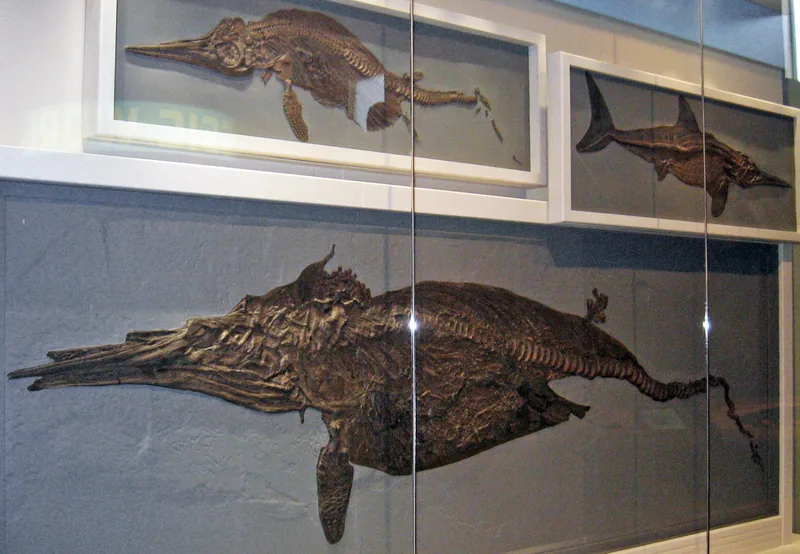
“The first known illustration of an ichthyosaur fossil was published by Edward Lhwyd in 1695, who at the time mistook it for a fish bone.” The same official page also says he “identified them as fish when he published the first known illustrations of ichthyosaur vertebrae in 1699.” Those two dates are both left as written. “Other scientists, however, thought that they might be ancient crocodiles or dolphins.”[source]
The name that stuck almost wasn’t the first one offered. After studying another of Mary Anning’s finds in 1819, Sir Everard Home “finally gave these animals the name Proteosaurus.” “However, this name didn’t catch on.” Scientists used Ichthyosaurus, “a name coined by our former Keeper of Mineralogy Charles Konig two years earlier in 1817.” “Ichthyosaurus, meaning ‘fish reptile’, ultimately inspired the name of the entire group.” Konig is spelled here as on that official page, without adding an umlaut.[source]
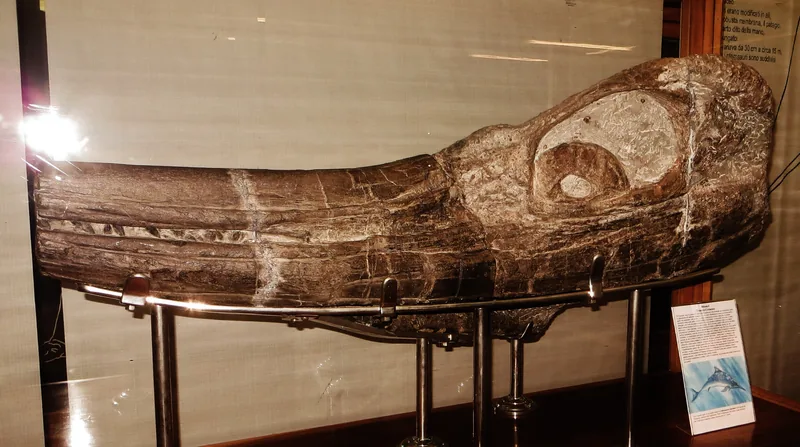
At first, “all ichthyosaur specimens were thought to be Ichthyosaurus fossils.” Henry de la Beche and William Conybeare named the first three species I. communis, I. platyodon and I. tenuirostris. “However, as more bones were discovered, scientists eventually realised that there were many kinds of ichthyosaurs. I. platyodon, for example, is now known as Temnodontosaurus and I. tenuirostris as Leptonectes.” Official wording now estimates “more than 100 species of ichthyosaur in total, with many more yet to be studied.”[source]
Where they came from is still officially a mystery. “At the moment, the ancestors of ichthyosaurs are thought to be a group of land-living reptiles that adapted to the sea.” “Unfortunately, we haven’t found any of the fossils that show this transition.” “It’s likely that ichthyosaur ancestors were diapsids — the group containing everything from dinosaurs to crocodiles — but their exact place in the family tree is the subject of ongoing scientific debate.” There are “clues that suggest that ichthyosaurs first evolved in Asia,” including unusual marine reptiles from China known as the hupehsuchians.[source]
Enjoyed this sea-dragon desk?
No pop-ups. No intrusive advertising. Just interesting stuff. A little support helps the next fossils.im site get built.