Credits
Every photograph on this site
Licences were checked on each source page on 18 November 2026. CC BY 4.0 stills are used on the website and credited; they are not placed in the typographic PDFs. CC BY-SA images, if any appear, are used on the website only, and are not placed in the downloadable fact sheets.
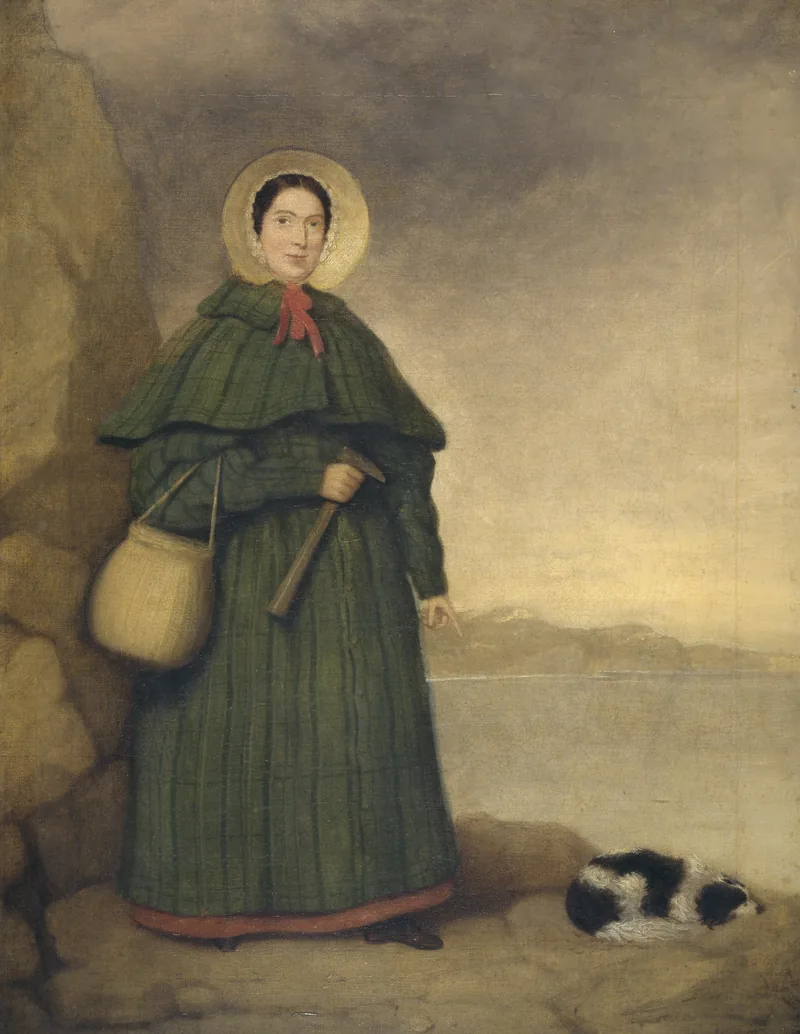
A portrait of Mary Anning by an unknown artist, painted before 1842. This is a historical painting, not a photograph of a fossil. Public domain. Painting: Unknown artist, before 1842 · Public domain · Wikimedia Commons 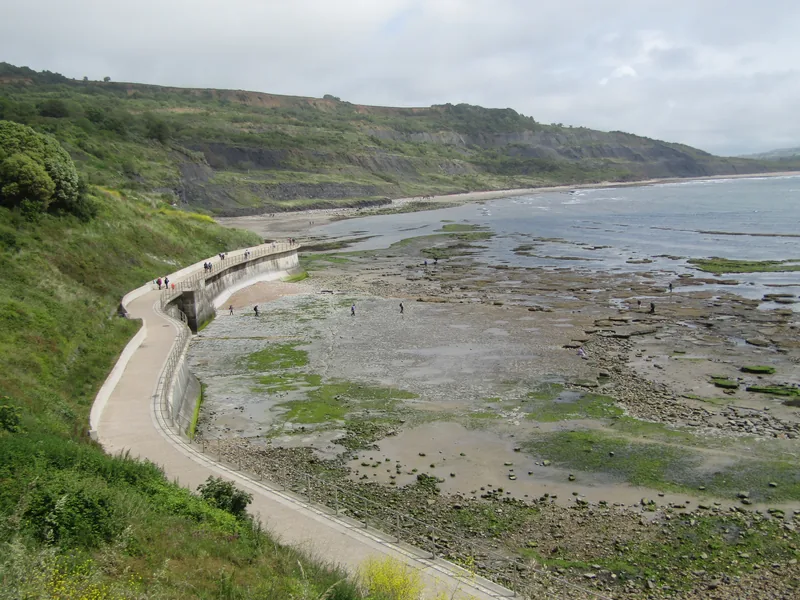
The foreshore at Church Cliffs, Lyme Regis, photographed by Colin Smith on 15 June 2019. Official pages place Joseph and Mary Anning’s early finds on this stretch of the Dorset coast. Licensed CC BY-SA 2.0; used on the website only, not in the typographic fact sheets. Photo: Colin Smith, 15 June 2019 · CC BY-SA 2.0 · Geograph Britain and Ireland / Wikimedia Commons 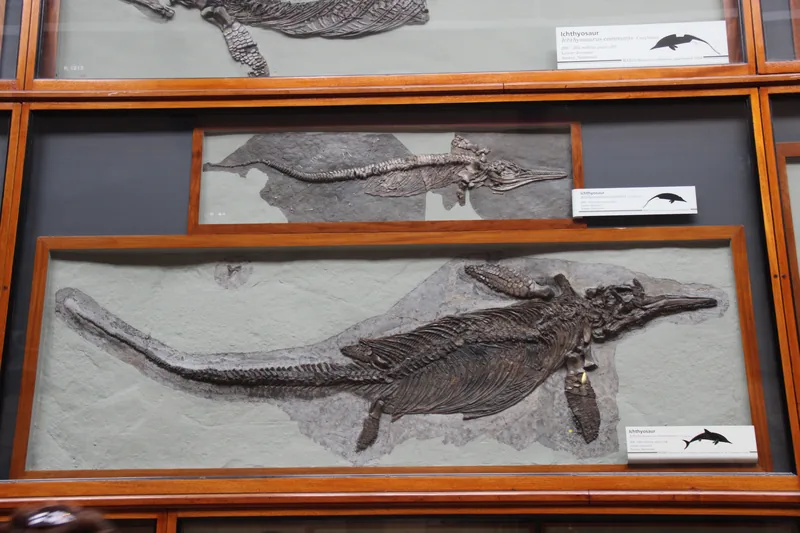
Skeletons of Ichthyosaurus communis in London, photographed by Gary Todd on 2 August 2017. The file identifies the species; it does not name a particular historical collector. Licensed CC0. Photo: Gary Todd, 2 August 2017 · CC0 · Wikimedia Commons 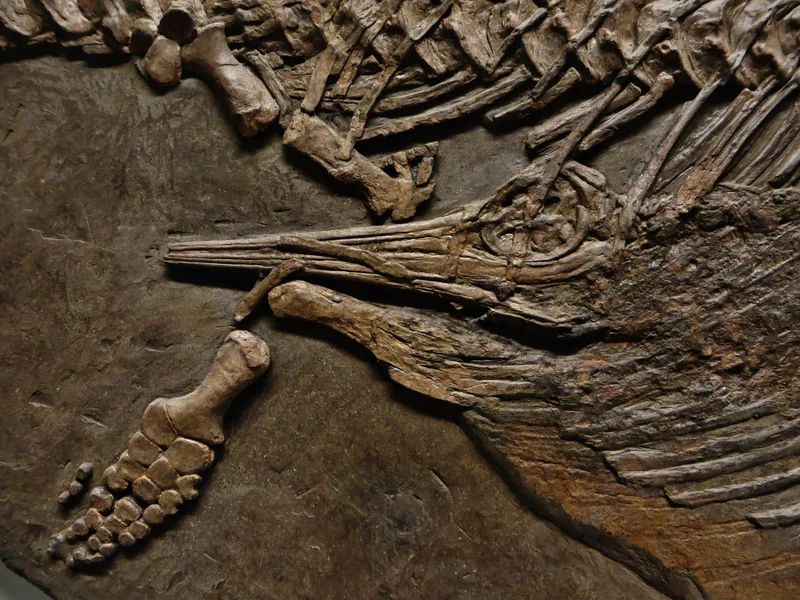
Stenopterygius quadriscissus with an embryo, photographed by Ghedoghedo on 19 August 2015. The official Natural History Museum discover page uses a Stenopterygius specimen to show that ichthyosaurs had live young. This photograph is not identified here as a particular gallery specimen in London. Licensed CC BY-SA 4.0; used on the website only. Photo: Ghedoghedo, 19 August 2015 · CC BY-SA 4.0 · Wikimedia Commons 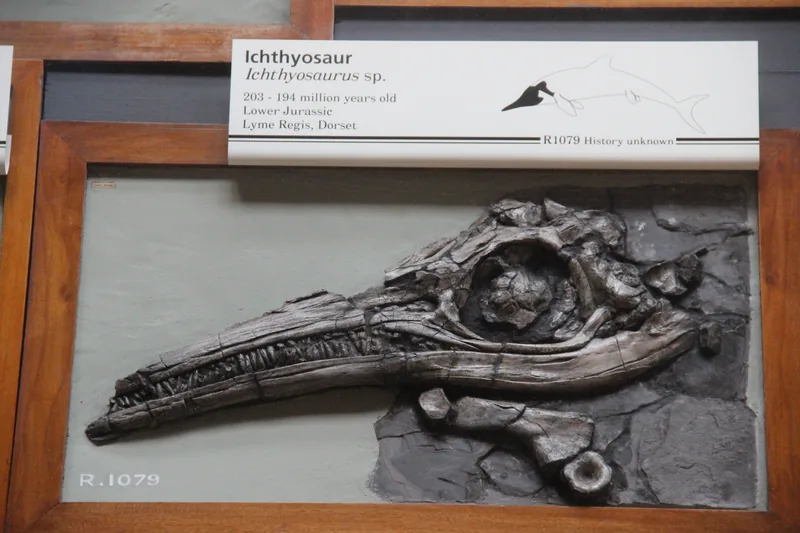
An ichthyosaur skull at the Natural History Museum, London, photographed by Gary Todd on 2 August 2017. The file names it Ichthyosaurus sp. This site does not relabel it as Temnodontosaurus, and does not identify it as the Anning skull. Licensed CC0. Photo: Gary Todd, 2 August 2017 · CC0 · Wikimedia Commons 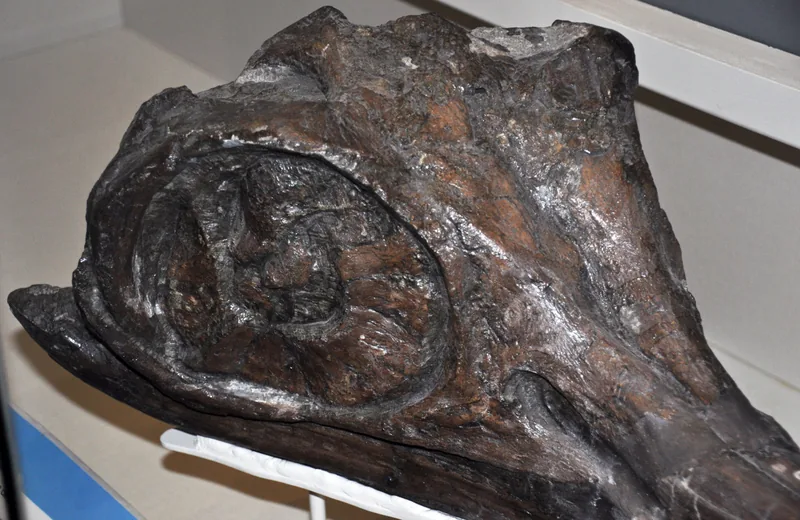
A skull of Ichthyosaurus communis from the Lower Jurassic of Lyme Regis, England, photographed by James St. John. The file identifies it as Carnegie Museum specimen CM 877. Licensed CC BY 2.0. Photo: James St. John · CC BY 2.0 · Wikimedia Commons 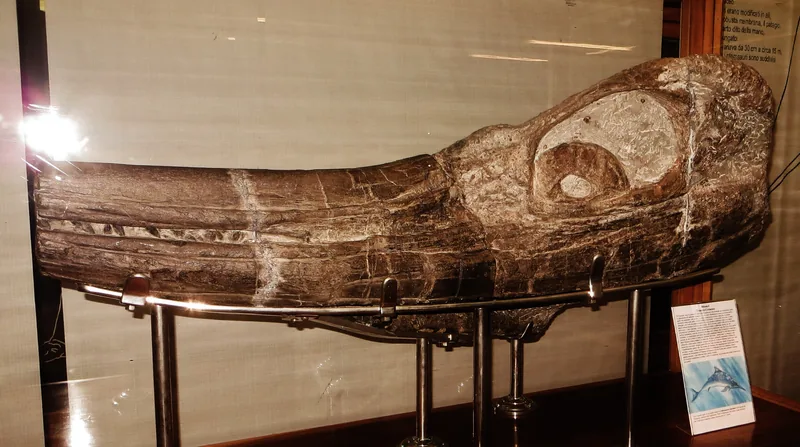
Temnodontosaurus platyodon, photographed by Ghedo on 28 August 2014. Official wording notes that I. platyodon is now known as Temnodontosaurus, and that the first scientifically studied skull is now called Temnodontosaurus platyodon. This photograph is not identified here as that particular 1810–1811 skull. Licensed CC BY-SA 4.0; used on the website only. Photo: Ghedo, 28 August 2014 · CC BY-SA 4.0 · Wikimedia Commons 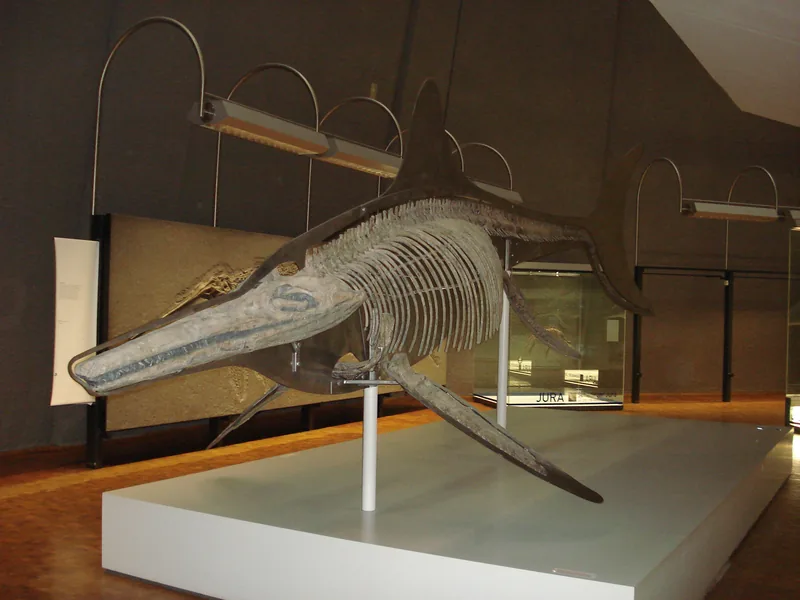
Temnodontosaurus trigonodon, photographed by Ghedoghedo in August 2010 at the Staatliches Museum für Naturkunde Stuttgart. Official pages describe a 10-metre Temnodontosaurus trigonodon found at Rutland Water in 2021, currently the largest ichthyosaur found in the UK. This Stuttgart fossil is not that Rutland specimen. Licensed CC BY-SA 3.0; used on the website only. Photo: Ghedoghedo, August 2010 · CC BY-SA 3.0 · Wikimedia Commons 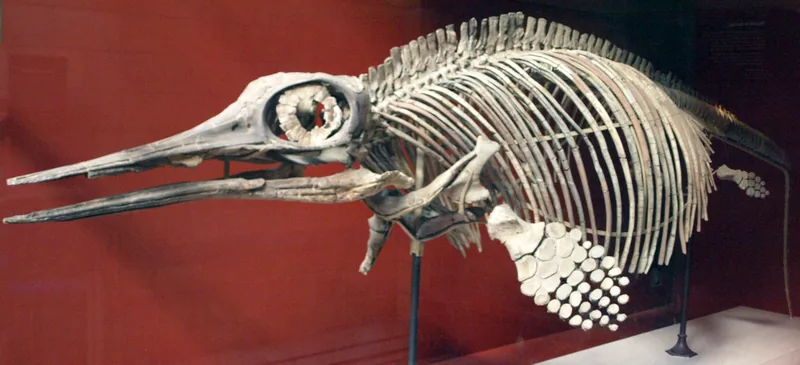
A skeleton labelled Ophthalmosaurus icenius in the Natural History Museum, London, photographed by Captmondo on 23 August 2008. The file says the specimen is from Oxford Clay, Peterborough, in the Callovian of the Middle Jurassic. Official collection wording uses the spelling Ophthalmosaurus icenicus for the Callovian Leeds collection. This caption keeps the file’s spelling with the photograph. Licensed CC BY-SA 3.0; used on the website only. Photo: Captmondo, 23 August 2008 · CC BY-SA 3.0 · Wikimedia Commons 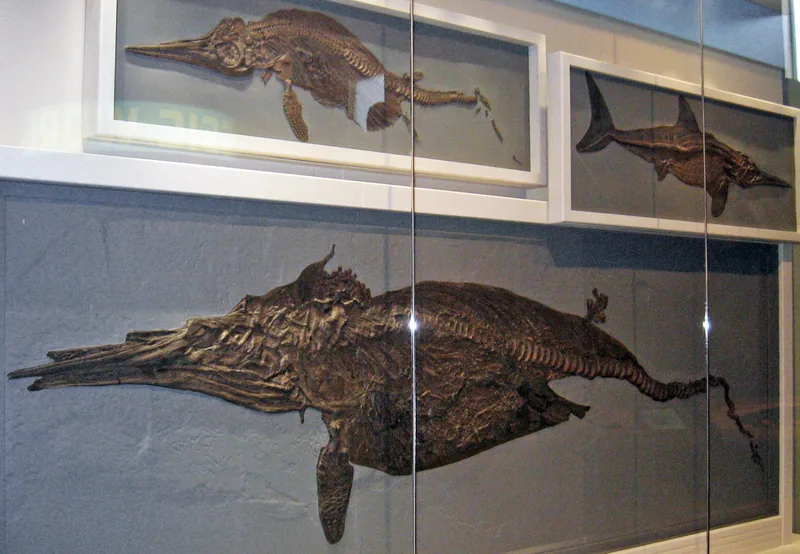
Stenopterygius quadriscissus skeletons from the Posidonia Shale, Lower Jurassic, Holzmaden area, Germany, photographed by James St. John. The file identifies Carnegie Museum specimens CM 876, CM 6001 and CM 6003. Licensed CC BY 2.0. Photo: James St. John · CC BY 2.0 · Wikimedia Commons 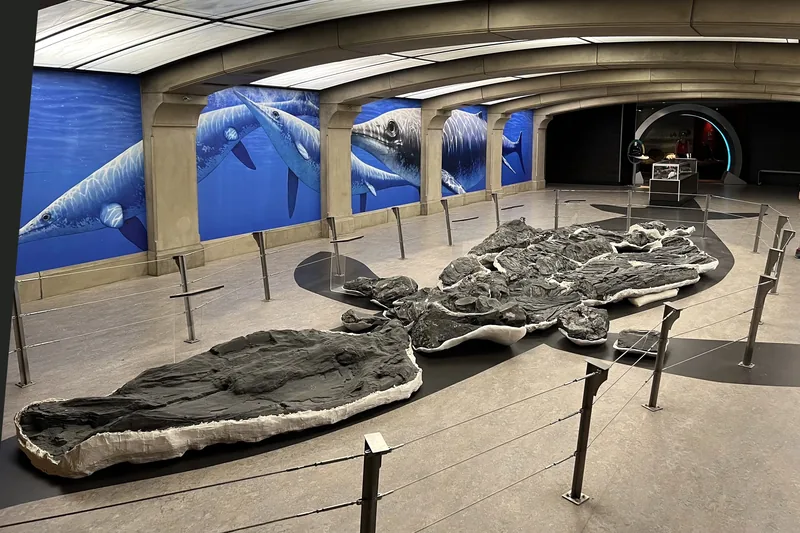
Shonisaurus sikanniensis on display at the Royal Tyrrell Museum, Drumheller, photographed by Jpmourez on 1 August 2022. The file caption gives a length of 21 metres for this animal; that figure stays with the file. Official Natural History Museum wording says species such as Shastasaurus and Shonisaurus measured between 15 and 21 metres, as a group range, and is kept on the How big? page. Licensed CC BY-SA 4.0; used on the website only. Photo: Jpmourez, 1 August 2022 · CC BY-SA 4.0 · Wikimedia Commons 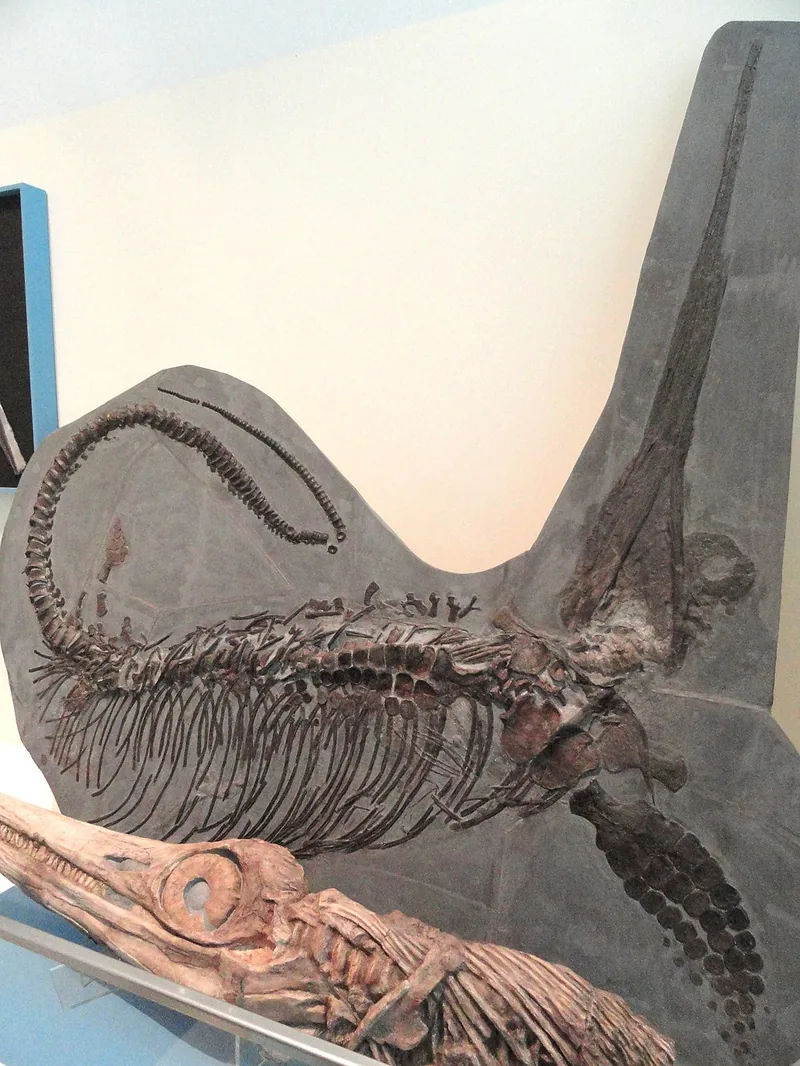
A near-complete Excalibosaurus, catalogue ROM 47697, on display at the Royal Ontario Museum, photographed by Daderot on 30 November 2011. The file does not name a locality in the description used here, and this site does not invent one. The original is 1,024 pixels wide, so this site uses 400- and 800-pixel stills only. Licensed CC0. Photo: Daderot, 30 November 2011 · CC0 · Wikimedia Commons
Enjoyed this sea-dragon desk?
No pop-ups. No intrusive advertising. Just interesting stuff. A little support helps the next fossils.im site get built.