Eyes, skin and soft tissue
Eyes more than 22 centimetres across
“The eyes of the ichthyosaur Ophthalmosaurus grew to more than 22 centimetres in diameter. For its size, it has the biggest eyes of any animal that ever lived.”[source]
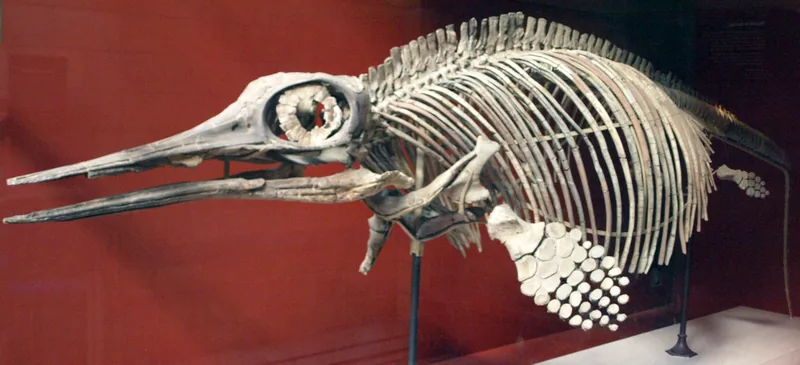
Species such as Ophthalmosaurus, official wording says, “have some of the largest eyes in the animal kingdom, which are thought to have helped them to see in the darkness.” “They would have been able to survive in the deep sea because all ichthyosaur species are thought to have been warm blooded.” “An exceptionally well-preserved fossil from Germany also suggests that ichthyosaurs had blubber to help trap their body heat, similar to modern dolphins.”[source]
The Ophthalmosaurus photograph on this page is labelled Ophthalmosaurus icenius in its file, and comes from Oxford Clay, Peterborough, in the Callovian of the Middle Jurassic. A collection page uses the spelling Ophthalmosaurus icenicus for a Callovian specimen in the Leeds collection from Cambridgeshire brick pits. This desk keeps the file’s spelling with the photograph, and the official spelling with the collection wording.[source]
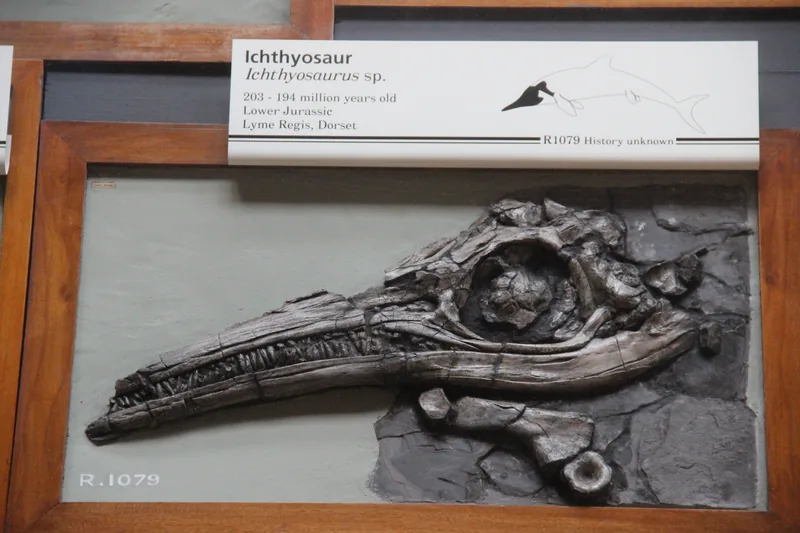
“All known ichthyosaurs were carnivores, with preserved faeces and stomach contents showing that they ate a variety of different animals ranging from small fish and squid to other marine reptiles.” “Some ichthyosaur prey were truly enormous. A five-metre-long Guizhouichthyosaurus skeleton found in China contains the remains of a crocodile-like thalattosaur that was almost as big as the Guizhouichthyosaurus itself.” Official wording adds that this ichthyosaur “might have bitten off more than it could chew, as it died shortly after swallowing this meal.”[source]
“While some ichthyosaurs looked similar to dolphins, there’s no evidence that they could echolocate in the same way.” Soft tissue, though, has shown a body outline that can look surprisingly dolphin-like. “The first ichthyosaur soft tissue fossils were discovered around the 1840s, but it wasn’t until the 1890s that more complete specimens were found.” German scientist Eberhard Fraas “reported on a well-preserved ichthyosaur that showed that these animals had a dorsal fin in the middle of their back.”[source]
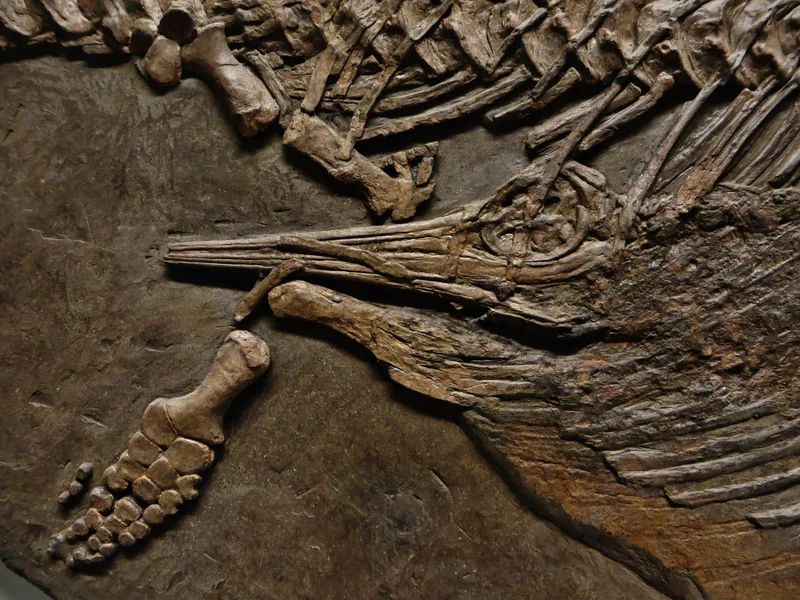
Dr Marc Jones, quoted officially, says preserved soft tissue from fins and flippers has “given us a better idea about how these animals moved,” and that preserved skin tells us more about their appearance. “Unlike many other reptiles, we know that ichthyosaurs had smooth skin to help them be more streamlined underwater. We’ve even found skin with evidence of pigmentation, which shows what colour ichthyosaurs were.” “While some ichthyosaurs might have had completely black skin, others appear to have been counter-shaded” — dark on top, lighter underneath. A giant soft-tissue fossil from a Temnodontosaurus, the same page says, “suggests that some species appear to have had ridges and structures similar to winglets on their flippers that helped them move more quietly underwater.”[source]
Enjoyed this sea-dragon desk?
No pop-ups. No intrusive advertising. Just interesting stuff. A little support helps the next fossils.im site get built.