ichthyosaurs.fossils.im
A skull on the shore, and a name that didn’t catch on
For centuries, official wording says, the remains of prehistoric sea creatures “have become part of sea dragon mythology.” Thanks to people such as Mary Anning, “we now know that these animals weren’t legends, but real reptiles that lived millions of years ago.”[source]
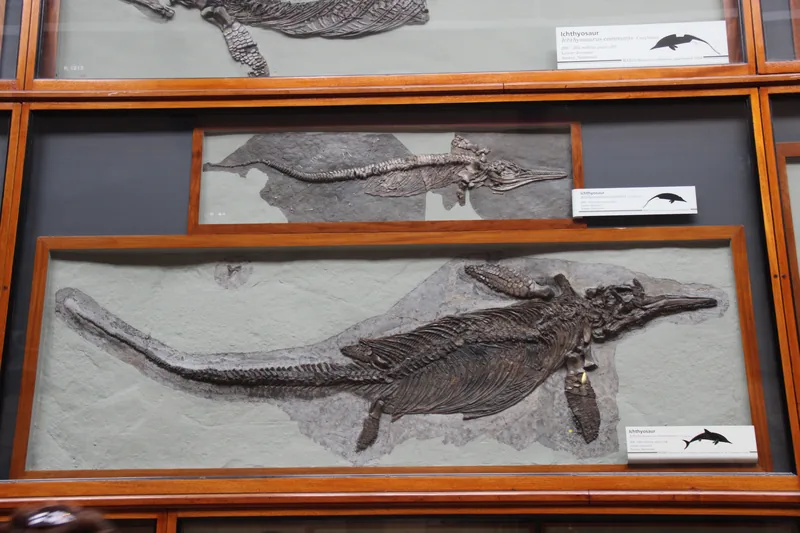
A skull, a sister, and a name
Pick a story. Official pages treat ichthyosaurs as real marine reptiles — not legends, and not dinosaurs — and they are careful about dates, names, and which specimen is which.

Start with a skull, and with the official pages’ careful firsts. A collection page dates Joseph Anning’s find to 1810, and says Mary found parts of the neck a year later. A discover page, and the Mary Anning page, date Joseph’s skull to 1811 — and the Anning page adds that Mary was 12. This site keeps those wordings side by side.[source][source][source]
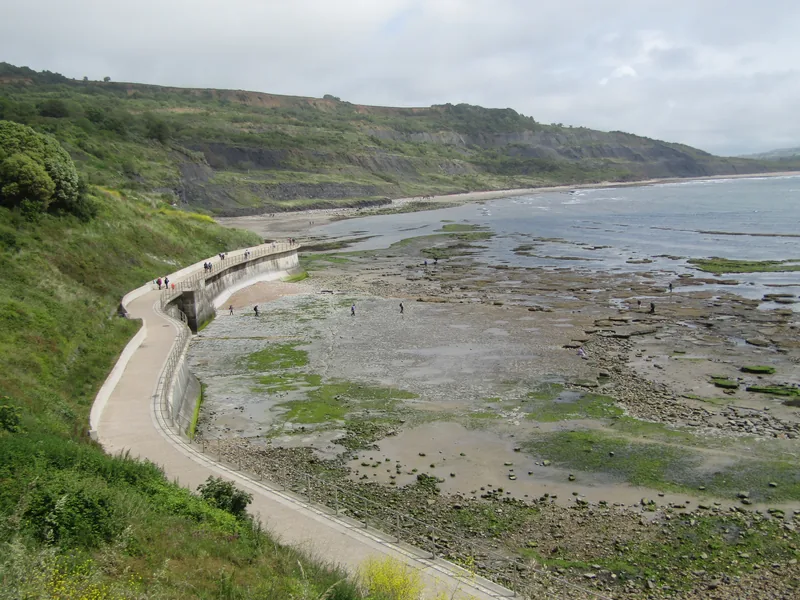
Then come the names. Sir Everard Home studied the Lyme Regis find in 1814, and in 1819 gave the animals the name Proteosaurus. “However, this name didn’t catch on.” Scientists used Ichthyosaurus, coined by Charles Konig in 1817. By 1820, the Mary Anning page says, the specimen was recognised as an extinct marine reptile — “fish lizard,” though “we now know it was neither fish nor lizard, but a marine reptile.”[source][source]
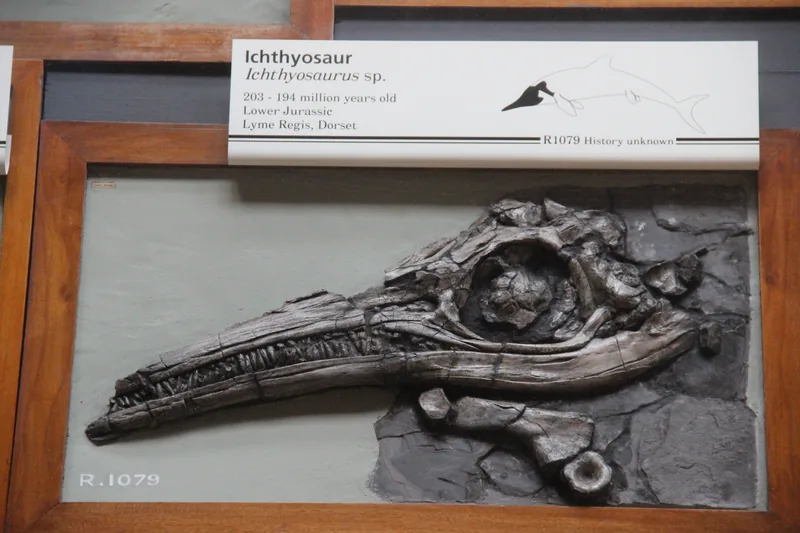
They were not dinosaurs. “Though they’re both reptiles and lived at the same time, dinosaurs aren’t closely related to ichthyosaurs. The dinosaurs lived on land, whereas ichthyosaurs never left the water.” Some grew huge: official wording estimates Ichthyotitan severnensis at as much as 25 metres, around the length of an average blue whale. Others had live young in the open ocean, and eyes more than 22 centimetres across.[source]
Enjoyed this sea-dragon desk?
No pop-ups. No intrusive advertising. Just interesting stuff. A little support helps the next fossils.im site get built.