Live young
They did not have to come ashore
“The adaptability of the ichthyosaurs meant that they subsequently spread across all the oceans of the world. This would have been made easier by the fact that they never had to return to land to reproduce or give birth.”[source]
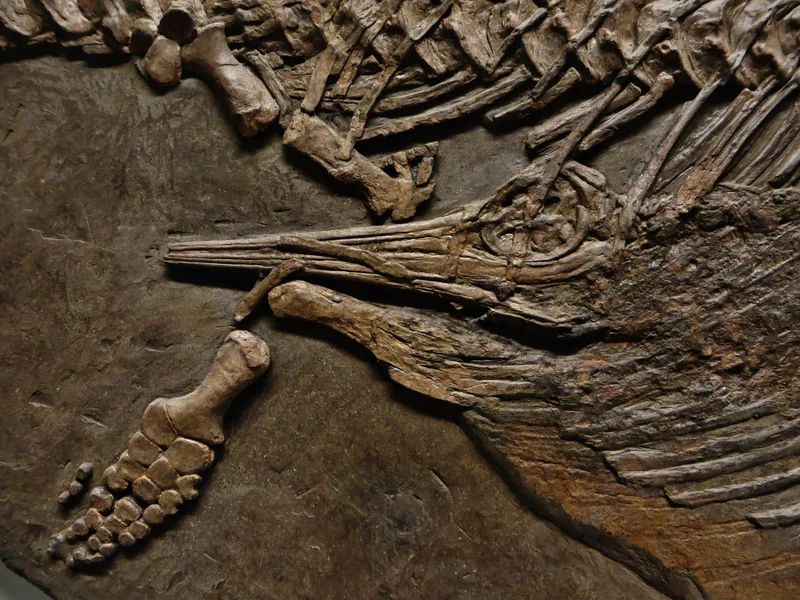
A discover page uses a clear fossil sentence: “Ichthyosaur fossils, such as this Stenopterygius specimen, reveal that ichthyosaurs didn’t lay eggs but instead had live births.” “Fossils of pregnant ichthyosaurs show that they gave birth to live young in the open ocean.” “As a result, fossils of these animals are found everywhere from the Arctic to Antarctica.” The embryo photograph on this page is Stenopterygius quadriscissus with an embryo, taken in 2015. Official wording about a Stenopterygius specimen is not used here to identify this still as a particular gallery fossil in London.[source]
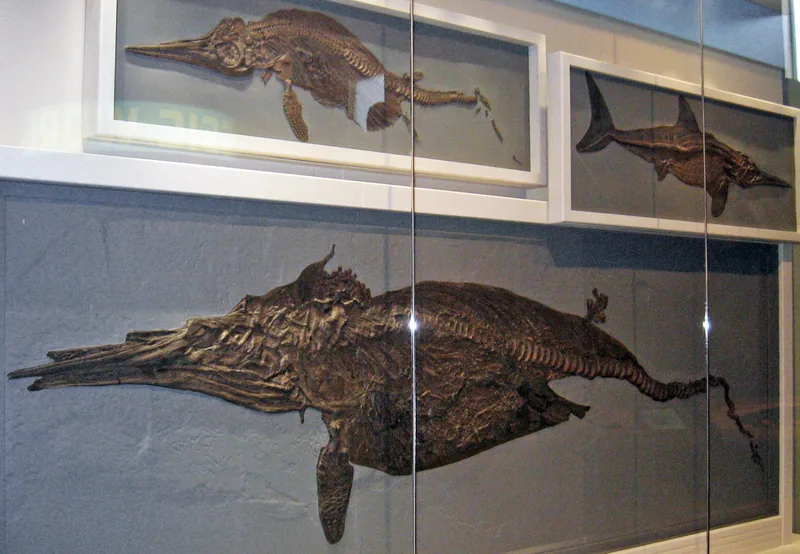
A Fossil Marine Reptiles gallery page, kept as its own official wording, asks visitors to look out for “a female ichthyosaur fossil with evidence of six unborn young in her womb and another specimen that died and was preserved in the process of giving birth.” That gallery wording is not blended with the discover page’s Stenopterygius sentence, and neither is treated as a caption for the photographs here unless a file says so.[source]
The same official discover page is cautious about freshwater. “While other marine reptiles are known to have adapted to life in freshwater, there’s no strong evidence so far that ichthyosaurs ever lived in lakes and rivers.” “One of the few possible signs of freshwater ichthyosaurs comes from a fossil found near Swanage in southern England.” “While it’s uncertain exactly where this ichthyosaur is from, research suggests that it came from a largely freshwater lagoon that was distantly connected to the sea.” If so, official wording says, “our understanding of ichthyosaurs would be transformed.”[source]
Enjoyed this sea-dragon desk?
No pop-ups. No intrusive advertising. Just interesting stuff. A little support helps the next fossils.im site get built.